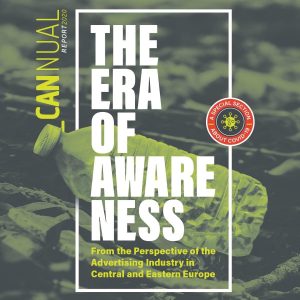

The CANnual Report 2020 is now available!
We produce the CANnual Report each year with local experts from the independent advertising and media agencies in the weCAN network. Together, they cover 16 markets in Central and Eastern Europe. Poland is represented by Media People and Walk Group.
The CANnual Report examines each market’s trends, economic and regulatory conditions, media expenditure and major changes among media providers. This edition also explores environmental challenges and the pandemic’s impact on marketing.
Advertising expenditure across Central and Eastern Europe fell by 19% during lockdown, disrupting even the most stable markets. This followed five years of sustained growth: in 2019, expenditure reached €15.2 billion, up 10% on 2018.
Digital advertising is growing rapidly and gradually taking a larger share of budgets previously allocated to television. Averaged across the region’s countries, television still led in 2019 with a 43% share, followed by online advertising at 34%. However, when expenditure is added together across all CEE markets, online advertising had already overtaken television in 2018. In 2019, online accounted for 45% of total expenditure (€6.9 billion), compared with television’s 37%. Print continued its long-term decline, while outdoor and radio maintained their positions.
Public awareness of environmental and social challenges grew in 2019. Research commissioned by the European Commission found that the number of people naming climate, energy or environmental protection among their country’s two most pressing issues rose by 80% in a single year. Businesses face growing expectations to help address these challenges. Our experts explored what this could mean for future trends across CEE. Although attitudes vary by country, they are closely linked to respondents’ financial circumstances and social status. Research using ESOMAR social classification criteria suggests that higher living standards are associated with stronger expectations of ethical business conduct.
Environmental issues dominated corporate social responsibility programmes until the coronavirus pandemic shifted attention towards healthcare and frontline workers. Lockdowns also reshaped consumer behaviour. Basic groceries, hygiene products and health supplements became priorities, while online shopping and digital content consumption surged. Changes that might otherwise have taken years happened within weeks. Between March and May, audiences for the five most popular websites in each CEE country grew by an average of 5% compared with 2019. Poland and Lithuania both recorded growth of 3%.
The pandemic affected industries differently. The surge in media consumption did not translate into higher advertising expenditure. As uncertainty grew, many campaigns were cancelled or postponed, and regional advertising expenditure fell by 19% year on year between March and May. FMCG, pharmaceutical and telecommunications brands proved resilient, while events, travel and automotive businesses were hit hard. Online services, digital entertainment and producers of cleaning and disinfectant products strengthened their positions.
“Our annual meetings and the work of experts from 16 CEE markets show that every country has its own character, despite our geographical proximity and shared challenges. The free movement of people, ideas and technology has not made us all the same. Differences in consumer behaviour and media use remain, and they matter when planning communication across the region. Effective marketers understand those differences and pay attention to local nuances,” says Weronika Szwarc-Bronikowska, Vice-President of Media People.